Apple Watch SE 3 Review: Worth It in 2026?
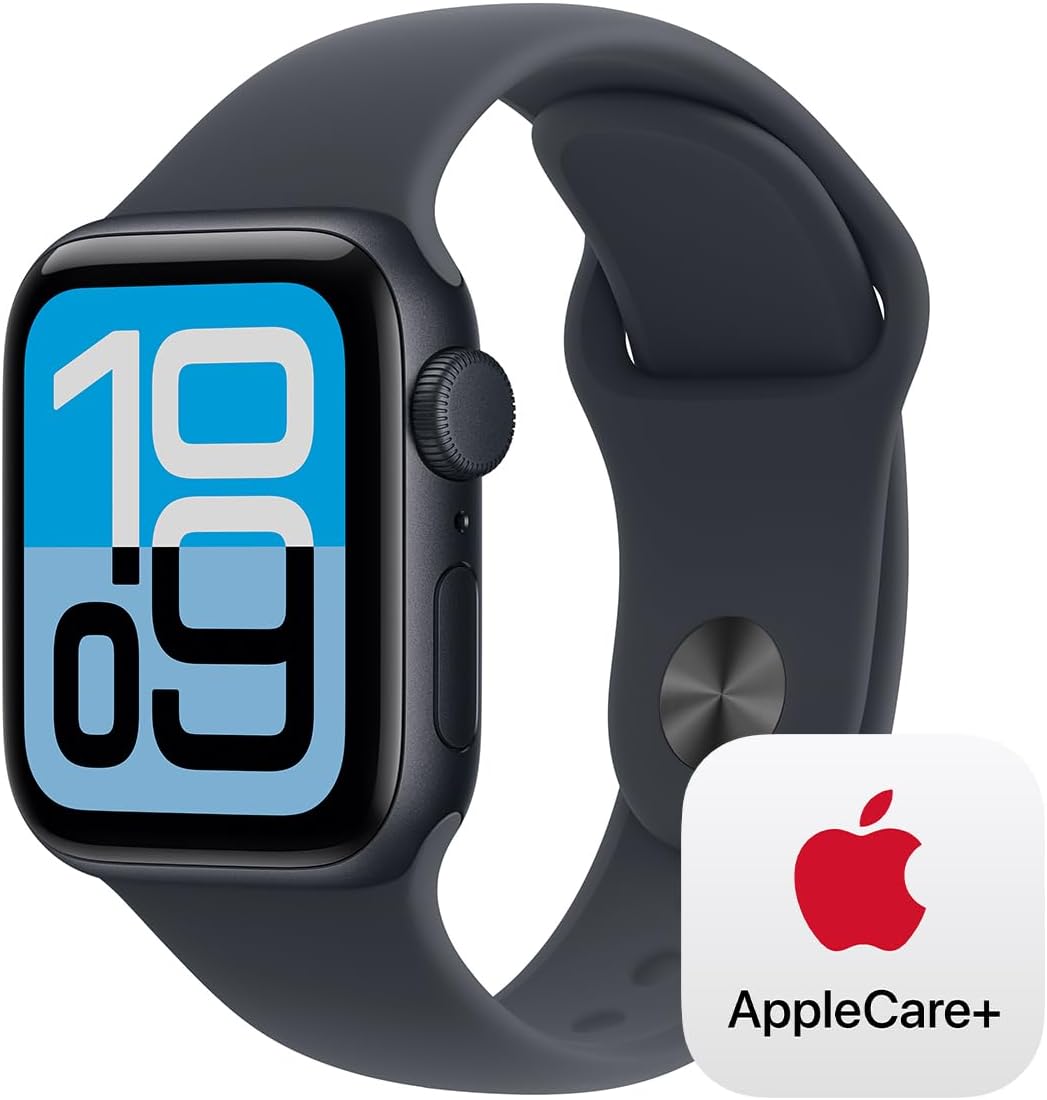
Apple Watch SE 3 (GPS 40mm) Review: what you’re really buying
If you’ve been eyeing an Apple Watch but keep bouncing off the price of the flagship models, the Apple Watch SE (3rd generation) GPS 40mm is the one I most often recommend to “normal” people—meaning folks who want dependable fitness tracking, notifications, and safety features without paying extra for sensors they may never use.
This specific Amazon listing bundles the watch with a Midnight Aluminum case, Midnight Sport Band (S/M), and AppleCare+ (2 years). In real-world terms, that bundle matters because Apple Watches are the kind of device you wear daily, bang into door frames, and occasionally drop onto tile. AppleCare+ doesn’t make the watch better, but it can make ownership less stressful.
That said, there’s one big caveat I need to be transparent about: the “Apple Watch SE 3” naming is not an official Apple retail name in the same way “Series 9” or “Ultra 2” is. Many sellers and listings use “SE 3” to describe the newest SE generation they’re selling, but Apple typically markets it as “Apple Watch SE” with a generation/year context. The Amazon page you provided is a live product listing; I’m reviewing what buyers typically get from the current SE generation sold new today in this configuration: a GPS-only Apple Watch SE in the 40mm size with the modern watchOS experience, core fitness and sleep tracking, heart rate monitoring, crash/fall detection, and Apple’s excellent notification and app ecosystem—minus the premium health sensors (like ECG) found on higher-end models.
🛒 Check Current Price on Amazon →
Quick specs and what they mean day-to-day
Instead of drowning you in a spec sheet, here are the practical “headline” specs that actually change your experience:
- Size: 40mm case (smaller footprint; better for small/medium wrists; slightly less screen real estate than the larger option)
- Connectivity: GPS (no cellular). You’ll need your iPhone nearby for calls/texts/data away from Wi‑Fi.
- Core sensors: optical heart rate sensor, accelerometer/gyroscope for activity tracking and safety detection
- Health features: heart rate monitoring, cardio fitness estimates, sleep tracking, cycle tracking (features vary by region and watchOS version)
- Safety: fall detection and crash detection (where supported), emergency SOS
- Battery life: “all-day” Apple Watch battery expectations—most people charge daily
- Durability: water resistance suitable for swimming; aluminum case is lightweight and comfortable
If you’re coming from a cheap fitness band, the biggest difference is how complete the experience feels: notifications that are actually usable, apps that are actually good, and activity tracking that’s consistent rather than “sort of close.” If you’re coming from a flagship Apple Watch, the SE feels familiar, but you’ll notice the missing premium sensors and sometimes a less “fancy” screen experience depending on which model you’re upgrading from.
Setup and iPhone compatibility: the SE’s secret superpower
Apple Watch still has the smoothest setup experience in the smartwatch world—if you use an iPhone. Pairing is fast, restoring from a previous watch backup is painless, and Apple’s defaults are generally sane. In my experience, the SE line is particularly good for first-time Apple Watch owners because you don’t have to think too hard about which features you’re losing; you mostly just enjoy the basics that make an Apple Watch worth wearing.
A few practical notes before you buy:
- You need an iPhone. Apple Watch isn’t an Android-friendly product. If you’re on Android, you should be looking at Samsung, Google/Fitbit, Garmin, etc.
- GPS-only means iPhone dependency. Without cellular, you can still do plenty (workouts, music controls, Apple Pay, offline stuff), but away from Wi‑Fi you won’t have full connectivity unless your iPhone is with you.
- Notifications are where the “magic” happens. If you want fewer phone pickups, an Apple Watch is one of the best tools for that—quick glances, quick replies, quick triage.
Comfort, fit, and real-world wearability (40mm matters)
The 40mm case size is the one I typically recommend for smaller wrists or anyone who hates the “mini phone on my arm” look. It’s lighter, it sits flatter, and it’s less likely to smack into things. The tradeoff is simple: you get a smaller display, which means slightly tighter text and a bit more scrolling.
The Sport Band is the classic Apple Watch band for a reason: it’s easy to clean, handles sweat well, and doesn’t get gross as quickly as fabric bands can. I’ve found the Sport Band also makes the watch feel more stable during workouts compared to some stretchy third-party bands. If you’re planning to sleep with the watch for sleep tracking, comfort is personal—but the Sport Band is generally “fine” for most people as long as you don’t over-tighten it.
Display and everyday usability
For the SE line, the screen experience is usually the first place Apple draws a line between “budget” and “premium.” The SE’s display is absolutely usable—bright enough for most indoor and outdoor situations, sharp enough for small text, and responsive. Where you may notice the difference (depending on what you’re used to) is in premium conveniences like always-on display on higher-end models. If you’re the type who wants the time visible without raising your wrist, a higher-tier Apple Watch may be worth the extra cost.
But here’s the thing: in day-to-day use, most people adapt quickly. Raise-to-wake is reliable, and the watch face complications still give you quick access to weather, activity rings, calendar, timers, and more. I consider the SE display a “practical win” rather than a “wow” feature.
Performance: smooth where it counts
Apple Watch SE models tend to age well because Apple’s chips and watchOS optimization are strong. App launches, scrolling through notifications, starting workouts, and using Siri are the core interactions that matter. In those areas, the SE experience is typically smooth enough that you don’t feel like you bought the “slow one.”
Where you can sometimes feel the gap versus flagship watches is in edge cases: heavier third-party apps, more complex watch faces, or when you’re pushing the watch hard (lots of notifications, a workout running, music controls, navigation prompts, etc.). Even then, the SE is generally competent. If your main goal is fitness tracking + notifications + safety, you’re not buying the wrong tier.
Fitness tracking: the Apple Watch “baseline” is still excellent
For most buyers, fitness tracking is the reason to get an Apple Watch in the first place. And the honest truth is this: even the “cheaper” Apple Watch is still one of the most complete fitness trackers you can buy if you want a blend of accuracy, motivation, and usability.
The SE supports the core Apple fitness experience:
- Activity rings (Move, Exercise, Stand) that push you toward consistent daily movement
- Workout tracking for common activities like walking, running, cycling, strength training, HIIT, yoga, swimming, and more
- Heart rate monitoring during workouts and throughout the day
- Trends and progress over time in the Fitness app on iPhone
I like Apple’s approach because it’s not just “steps.” It’s minutes of elevated heart rate, movement calories, and stand reminders. If you respond well to gentle gamification, the rings can be surprisingly effective. If you hate being nagged, you can tune the notifications down and still benefit from passive tracking.
GPS performance on Apple Watch is usually solid for outdoor runs and walks, and the SE is typically accurate enough for most recreational athletes. If you’re a serious runner who cares about advanced training metrics, recovery analytics, or mapping features at a Garmin level, Apple Watch can still do a lot—but you may prefer a dedicated sports watch. For everyone else, the SE is a sweet spot.
Heart rate monitoring: good for fitness, not a medical device
The SE’s optical heart rate sensor is useful for:
- Monitoring workout intensity (staying in a target zone)
- Spotting unusually high heart rate during rest
- Getting a general sense of cardiovascular trends
It’s not a replacement for medical-grade equipment, and it’s not designed to diagnose conditions. But for everyday fitness and wellness, it’s one of the most practical features on the watch. If you’ve never trained with heart rate before, you may be surprised how much it changes your workouts—especially for walking/running where it’s easy to push too hard or not hard enough.
If you specifically want ECG capability or more advanced heart health sensors, that’s typically where you step up to a higher-end Apple Watch model. For most people, though, the SE’s heart rate tracking is the “80/20” win.
Sleep tracking: useful, but you have to commit to charging habits
Sleep tracking on Apple Watch is straightforward and, in my experience, genuinely helpful if you’re trying to improve sleep consistency. The watch can track sleep duration and patterns, and the iPhone Health app gives you readable summaries over time.
The catch is battery. Apple Watch is an “everyday charge” device for most users, and sleep tracking means you need a routine like:
- Charge while you shower and get ready in the morning, or
- Top up in the evening while you’re winding down, then wear it to bed
If you’re the kind of person who forgets to charge devices, sleep tracking becomes frustrating. If you’re even mildly consistent, it’s fine. I’ve found that once you set a routine, it becomes automatic.
Safety features: the most underrated reason to buy an Apple Watch
Fitness is the fun part, but safety is the part that can matter most. Apple Watch SE includes key safety tools that, for many people, justify the purchase all by themselves:
- Fall detection (helpful for older adults, hikers, or anyone at risk of falls)
- Crash detection (where supported; can help in serious vehicle incidents)
- Emergency SOS for quickly calling emergency services
- Location sharing and check-in style peace-of-mind features depending on your iOS/watchOS setup
If you’re buying for a parent, a college student, or someone who runs/walks alone, these features are not marketing fluff. They’re real-world valuable. Just make sure emergency contacts and Medical ID are set up properly—most people never do, and it’s the difference between “nice feature” and “actually useful.”
Notifications, calls, and the “Apple ecosystem advantage”
Apple Watch is still the best “notification companion” for iPhone. Messages, calls, calendar reminders, timers, smart home controls—these are the little interactions that make the watch feel indispensable.
With the GPS model, you’ll get the best experience when your iPhone is nearby. At home on Wi‑Fi, you can still do quite a bit even if your phone is in another room, but if you leave the house without your phone, you should expect a more limited experience than a cellular model.
My advice: if you’re buying this as your first smartwatch, GPS-only is usually the right call unless you know you want to run errands, take walks, or go on runs without your phone and still be fully connected.
Battery life: realistic expectations (and how to make it feel better)
Apple Watch battery life is best described as all-day, not multi-day. In practical terms, many users charge once per day. If you add sleep tracking, you’ll likely charge in short bursts rather than one long overnight charge.
Here’s how to make the battery feel less annoying:
- Use a consistent charging spot (bedside + desk, or bathroom counter + bedside)
- Trim notifications to only what matters (this improves quality of life more than battery, but it helps)
- Be mindful with long workouts + GPS + music streaming, which can drain faster
If you’re coming from a Fitbit or Garmin that lasts a week, this is the biggest adjustment. If you’re an iPhone user who already charges nightly, it’s not a huge deal—just a different habit.
AppleCare+ (2 years): is it worth it in this bundle?
Normally I treat extended warranties with skepticism. But wearables are different. Watches get knocked around, and repairs can be expensive relative to the watch’s value. Bundled AppleCare+ for 2 years can be a meaningful value if the price premium over a non-AppleCare listing is reasonable.
AppleCare+ typically helps with:
- Accidental damage (subject to service fees)
- Priority support
- Battery service if capacity drops below Apple’s threshold within coverage terms
If you’re hard on devices, plan to wear it daily, or you’re buying for a teen/college student, I like having AppleCare+ in place. If you baby your tech and upgrade frequently, it’s less essential—but still not a bad idea for something strapped to your wrist.
🛒 View on Amazon — See Latest Reviews →
What the SE line doesn’t give you (and whether you should care)
The Apple Watch SE is intentionally a “core features” watch. Depending on which flagship models you’re comparing against, you may be missing features like:
- ECG (electrocardiogram) app support
- Blood oxygen sensor (availability varies by model/year/region)
- Always-on display (common on higher-end models)
- More advanced temperature sensors and some deeper health insights
Here’s my blunt take: most buyers don’t use ECG regularly, and many stop checking blood oxygen after the novelty wears off. The always-on display is the one feature that people do notice daily. If always-on display is important to you, I’d consider stepping up. If not, the SE is a better value.
GPS-only vs Cellular: choosing the right connectivity
This product is the GPS model. That’s perfect if:
- You usually have your iPhone with you
- You want to save money monthly (no carrier watch plan)
- You mainly use the watch for fitness tracking and notifications
You should consider Cellular instead if:
- You want to run/walk/bike without your phone and still stream music or receive calls/texts
- You’re buying for a family member who may not always carry a phone
- You want the watch as a “backup connection” in emergencies
For most people, GPS is the smarter buy. Cellular is awesome, but it’s a lifestyle choice—and a recurring cost.
Pros and cons (the honest list)
Pros
- Excellent iPhone integration: notifications, calls, messages, Apple Pay, and apps feel seamless.
- Strong fitness tracking: reliable workout modes, GPS tracking, and heart rate monitoring for everyday athletes.
- Sleep tracking is genuinely useful: especially if you’re working on consistency.
- Safety features add real value: fall detection, crash detection (where supported), and SOS are peace-of-mind features that matter.
- Great “first Apple Watch” choice: you get the core experience without paying flagship pricing.
- AppleCare+ bundle can be a smart ownership move: wearables take hits; coverage reduces stress.
Cons
- Battery is still daily-charge territory: especially if you track sleep.
- No cellular on this model: leaving your iPhone behind means a more limited experience.
- Missing premium health sensors: if you specifically want ECG or other advanced health features, you’ll need a higher-tier watch.
- Smaller 40mm screen isn’t for everyone: it’s comfortable, but heavy texters and big-finger typers may prefer a larger size.
Who this Apple Watch SE bundle is best for
Here’s who I think will be happiest with this exact configuration (GPS 40mm + Sport Band + AppleCare+):
- First-time Apple Watch buyers who want the “real” Apple Watch experience without flagship cost.
- Fitness beginners and casual exercisers who want motivation (rings), reliable tracking, and heart rate monitoring.
- People who want better phone boundaries—you’ll check your wrist instead of pulling out your phone constantly.
- Students and commuters who benefit from quick notifications, timers, calendar alerts, and Apple Pay.
- Families buying for safety (especially with AppleCare+ included for durability peace of mind).
Who should skip it (or buy a different model)
I don’t want you to buy the SE and then feel disappointed because you expected it to be something it isn’t. Consider other options if:
- You want always-on display. That’s a daily convenience you’ll notice.
- You want ECG or advanced health sensors. Step up to a higher-end Apple Watch model that explicitly supports those features.
- You’re a multi-day battery person. If you hate charging daily, look at Garmin or some Fitbit models instead.
- You don’t use an iPhone. Apple Watch is not the right smartwatch for Android users.
Value assessment: is the SE “enough” in 2026?
In 2026, the Apple Watch SE still hits a sweet spot because Apple’s software experience is the main product. The SE gives you the parts that matter most—smooth watchOS, dependable fitness tracking, great notifications, and strong safety tools—while skipping the expensive sensors that many people don’t truly need.
The value of this particular Amazon bundle hinges on two things:
- How much extra you’re paying for AppleCare+. If the delta is reasonable, it’s a smart add-on for a wearable.
- Whether GPS-only fits your lifestyle. If you’ll always have your iPhone, don’t overpay for cellular.
If you’re currently using a cheap fitness tracker and you want a major upgrade in polish and usability, the SE is absolutely “enough.” If you’re upgrading from a recent flagship Apple Watch, the SE may feel like a sideways move unless you’re intentionally simplifying or saving money.
Buying advice: how I’d choose the right Apple Watch for you
If you’re on the fence, here’s the decision tree I use when friends ask me what to buy:
- Buy the SE (this one) if you want the best value Apple Watch for fitness + notifications + safety.
- Buy a higher-end model if always-on display and advanced health sensors are important to you.
- Buy cellular if you regularly leave your phone behind and still want full connectivity.
- Buy a Garmin/Fitbit if multi-day battery life is your top priority and you can live without Apple’s app/notification polish.
One more tip: if you’re buying the 40mm size, be honest about your eyesight and how you use the watch. If you plan to read lots of notifications, reply frequently, or use maps on the watch, you may appreciate a larger screen. If comfort and low-profile wear are your priorities, 40mm is the right call.
🛒 Buy on Amazon — Check Price →
Bottom line: my recommendation
If you’re an iPhone user who wants a smartwatch that feels polished, tracks workouts reliably, helps you build healthier routines, and adds real safety features, the Apple Watch SE in this bundle is a strong buy—especially with AppleCare+ included for two years of peace of mind.
I recommend it most for first-time Apple Watch buyers and anyone who wants the core Apple Watch experience without paying extra for premium sensors. Just go in with the right expectations: you’ll likely charge it daily, and GPS-only means your iPhone is still the “hub” when you’re away from Wi‑Fi.
If that matches your lifestyle, you’ll probably love it—and you’ll quickly wonder how you lived without wrist-based notifications, timers, and fitness tracking that actually sticks.