JBL Vibe Beam Review: Worth It in 2026?
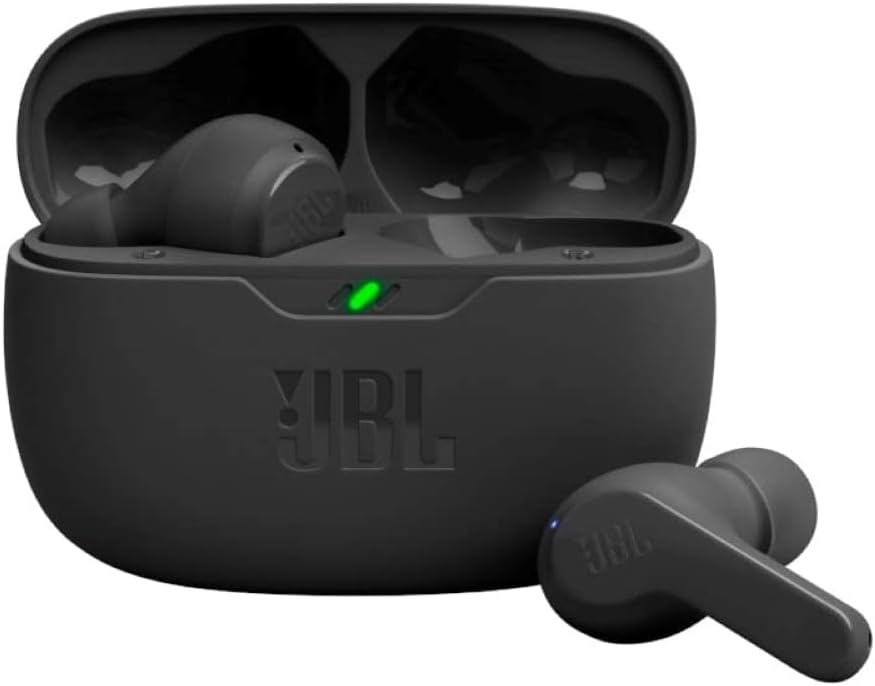
JBL Vibe Beam Review (Deep Bass on a Budget)
If you’re shopping for affordable true wireless earbuds, the JBL Vibe Beam are aimed squarely at the “everyday earbuds” crowd: commuters, gym-goers, students, and anyone who wants a recognizable brand, strong battery life, and a fun, bass-forward sound without paying premium prices. They’re not trying to be AirPods Pro competitors, and that’s actually the right mindset to have going in.
I’ve spent a lot of time with budget earbuds over the years, and the Vibe Beam land in a familiar sweet spot: they nail the basics (comfort, battery, simple controls, punchy sound) and skip the expensive extras (active noise canceling, high-end codecs, advanced multipoint features). If that sounds like what you want, these can be a very satisfying buy. If you’re expecting ANC and “conference call” mic performance, you’ll want to keep reading—because that’s where the compromises show up.
🛒 Check Current Price on Amazon →
Quick Specs (What Matters in Real Life)
Here are the headline specs that actually impact day-to-day use:
- Bluetooth: 5.2 (stable connection, efficient power use)
- Battery life: up to 32 hours total (earbuds + case) depending on volume and usage
- Durability: IP54 water and dust resistance (earbuds)
- Calls: built-in mics with VoiceAware (you can hear some of your own voice during calls)
- Fit style: in-ear, closed design focused on passive isolation
Translation: these are designed to be thrown in a bag, used hard, and charged infrequently—more “daily driver” than “audiophile toy.”
Design & Comfort: Low-Fuss, Secure, and Pocketable
The Vibe Beam go with a compact, practical earbud shape that sits securely without feeling like it’s trying to wedge itself into your skull. Comfort is always personal, but I’ve found JBL’s budget in-ears tend to do well for average ears because they don’t overcomplicate the housing shape. If you typically struggle with earbuds falling out during walking or light workouts, the Vibe Beam’s in-ear seal can help a lot—assuming you take the time to pick the right ear tip size.
The charging case is also a big part of the “real-world usability” story. It’s small enough to pocket, and that matters more than people admit. A lot of budget earbuds sound fine but come with a bulky case you stop carrying. With the Vibe Beam, it’s easy to keep them on you, which is half the battle with true wireless.
My comfort advice: Spend two minutes testing ear tips. If bass is weak or the earbuds feel loose, you probably need a larger tip. If your ears feel pressure or soreness after 20–30 minutes, try a smaller tip. A proper seal is the difference between “okay earbuds” and “wow, these hit hard.”
Durability (IP54): Good for Sweat, Light Rain, and Daily Grime
The Vibe Beam earbuds carry an IP54 rating. In normal-person terms, that means they’re built to handle sweat, splashes, and dusty environments better than non-rated earbuds. For gym sessions, outdoor walks, and commuting in unpredictable weather, that’s a meaningful feature at this price.
Two caveats I always tell readers:
- IP54 isn’t “waterproof.” Don’t shower with them, don’t swim with them, and don’t rinse them under a faucet.
- The case usually isn’t as protected as the earbuds. Even if the earbuds can take sweat, keep the case dry—especially around the charging contacts.
If you want something you can confidently use in the gym without babying it, IP54 is the line where I start to feel comfortable recommending earbuds.
Sound Quality: JBL’s Fun “Deep Bass” Tuning
Let’s talk about what most people buy these for: the sound. JBL markets “Deep Bass Sound,” and in this case it’s not just empty branding. The Vibe Beam are tuned to sound big and energetic, with an emphasis on low-end punch. If you listen to hip-hop, EDM, pop, reggaeton, or anything where the beat drives the experience, these are simply enjoyable.
Bass: The bass is the star. With a proper seal, you get a satisfying thump and rumble that makes workouts and commutes more fun. It’s not the tightest, most textured bass I’ve heard (that usually requires spending more), but it’s strong and pleasing.
Mids (vocals/instruments): The midrange is slightly pulled back compared to the bass. Vocals are still clear enough for podcasts and most music, but if you’re a “vocal-first” listener (acoustic, jazz, singer-songwriter), you may find the presentation less intimate than a more balanced set of earbuds.
Treble (detail/brightness): The top end is generally safe—meaning it avoids harshness and sibilance for most listeners. The trade-off is that you won’t get the same crisp sparkle and micro-detail you’d hear from higher-end earbuds. For many buyers in this price range, that’s a fair exchange for fatigue-free listening.
Soundstage/imaging: Don’t expect “3D holographic” sound. These are closed in-ears with a mainstream tuning. But for casual listening, they do the job well and avoid the thin, tinny sound that plagues a lot of cheap earbuds.
Bottom line on sound: If you want a fun, bassy signature that makes modern music sound lively, the Vibe Beam deliver. If you want a neutral, studio-style tuning, you should look elsewhere.
Passive Noise Isolation (No ANC): Better Than You Might Expect
The JBL Vibe Beam do not have active noise canceling. That’s a key distinction, because many shoppers assume all modern earbuds include ANC. They don’t.
That said, a good in-ear seal provides passive isolation, and the Vibe Beam can block a decent amount of everyday noise—especially higher-frequency sounds like chatter and some office noise. Low-frequency rumble (bus engines, airplane cabin noise) is where ANC usually shines, and you’ll still hear more of that compared to ANC earbuds.
If you commute and want to turn volume down while still hearing less outside noise, the fit and seal matter more than any marketing. With the right tips, these isolate well enough for most daily situations.
Call Quality & VoiceAware: Useful Feature, Average Mics
JBL includes VoiceAware, which is a feature that feeds some of your own voice back into your ears during calls. Some people love this because it stops you from shouting. Others dislike it because they prefer calls to sound “sealed off.” The good news: VoiceAware is genuinely practical if you take calls while walking outdoors or in louder environments.
Now for the honest part: mic quality on budget earbuds is rarely amazing, and the Vibe Beam are no exception. In quiet indoor spaces, calls are typically fine—your voice comes through clearly enough for casual conversations. In noisy environments (traffic, wind, busy coffee shops), don’t expect miracles. The earbuds can struggle to isolate your voice from the background compared to higher-end models with more advanced noise reduction and mic arrays.
Who will be happy: People who take occasional calls, voice notes, or quick meetings in reasonably quiet places.
Who should upgrade: Anyone who lives on Zoom/Teams calls or needs consistently strong mic performance outdoors.
Battery Life: The “Set It and Forget It” Strength
Battery is one of the biggest reasons to buy the Vibe Beam. JBL advertises up to 32 hours total with the case. Your real-world results will vary based on volume (louder drains faster), call usage, and how often you open/close the case, but the overall experience is what matters: you don’t feel like you’re charging them constantly.
For most people, this translates to:
- Multiple days of casual listening without thinking about charging
- A solid buffer for travel and long commutes
- Less battery anxiety compared to smaller-battery “micro” earbuds
If you’ve ever owned true wireless earbuds that die at the worst time, you’ll appreciate the Vibe Beam’s endurance-oriented approach.
Bluetooth 5.2 Performance: Stable, Simple, and Modern Enough
Bluetooth 5.2 is a good baseline in 2026. In practice, the Vibe Beam deliver a stable connection for everyday use—walking around the house, commuting, working at a desk. You’re not buying these for ultra-low latency gaming or advanced codec support; you’re buying them to connect quickly and stay connected.
One thing I always remind readers: connection stability is also heavily influenced by your phone and your environment. Crowded areas with lots of wireless interference (gyms, apartment buildings, busy streets) can trip up any budget earbuds. But overall, the Vibe Beam behave like what you’d expect from a reputable brand: no constant dropouts, no weird reconnection loops, no “why won’t you pair” drama after the first setup.
Controls & Daily Usability: Easy Once You Learn Them
True wireless earbuds live or die by how annoying they are day-to-day. The Vibe Beam are generally straightforward: you can control playback and calls without pulling your phone out constantly. Like most earbuds, there’s a learning curve for the tap patterns, and accidental taps can happen when adjusting fit.
My usability take: They’re practical earbuds, not “feature-flex” earbuds. If you want a set you can hand to a family member and not become tech support, JBL’s simpler approach is a plus.
What You Don’t Get (And Shouldn’t Expect at This Price)
Part of making a smart purchase is knowing what’s missing and deciding if it matters to you. Here’s what the JBL Vibe Beam typically won’t satisfy if it’s on your must-have list:
- No active noise canceling (ANC): You’ll rely on passive isolation.
- No “premium” transparency mode: If you want to pipe outside sound in naturally, you’ll need a different model.
- Mic quality is not flagship-level: Fine for casual calls, not ideal for constant noisy calls.
- Audiophile detail and separation: They’re fun, not analytical.
None of this is a dealbreaker if your expectations match the product category. In fact, I prefer when budget earbuds focus on getting the fundamentals right rather than adding mediocre versions of premium features.
Pros and Cons (The Honest List)
Pros
- Big, enjoyable bass that makes modern music sound energetic
- Strong total battery life (advertised up to 32 hours with case)
- IP54 water/dust resistance is great for workouts and daily use
- Comfortable, secure fit for many ears with the right tips
- VoiceAware is genuinely helpful for calls if you tend to talk loudly
- Good brand reliability compared to random no-name budget earbuds
Cons
- No ANC, so low-frequency noise isn’t reduced like premium earbuds
- Call quality is average in wind/traffic or loud environments
- Bass-forward tuning isn’t ideal for listeners who want neutral sound
- Not a “feature monster”—you’re paying for fundamentals, not extras
Who the JBL Vibe Beam Are Best For
These earbuds make the most sense for specific types of buyers. Here’s who I think will genuinely enjoy them:
- Commuters who want solid passive isolation, reliable Bluetooth, and battery that lasts days.
- Gym-goers who need sweat resistance (IP54) and a secure fit without paying for ANC.
- Bass lovers who want punch and energy more than studio accuracy.
- Students and casual listeners who want a reputable brand and simple daily usability.
- Anyone upgrading from bargain-bin earbuds and wanting a noticeable step up in tuning and reliability.
Who Should Skip Them
Just as important: here’s who I think should look at a different category of earbuds:
- Frequent callers in noisy places (windy walks, job sites, busy cafés). You’ll want stronger mic processing.
- ANC shoppers who need quieter flights, trains, or open offices. Passive isolation won’t match true ANC.
- Neutral-sound listeners who prioritize vocal accuracy and treble detail over bass impact.
- Power users who want premium app features, advanced multipoint behavior, or high-end codec support.
Real-World Use Cases (Where They Shine)
Walking and commuting: The in-ear seal plus bass-forward tuning is a great combo for city use. You don’t need to crank volume as much as with weaker earbuds because the low end stays present even at moderate levels.
Gym sessions: IP54 and a stable fit are what matter here. The Vibe Beam are a good “throw them in the bag” option for workouts, especially if you don’t want to risk expensive earbuds.
Podcasts and YouTube: Clear enough for spoken word, with a warm tone that many people find pleasant. If you’re picky about vocal presence, you may prefer a more mid-forward set, but most listeners will be perfectly happy.
Travel (without ANC): Battery life is travel-friendly, but just remember: airplanes and trains are where ANC makes the biggest difference. If you travel constantly, it may be worth stepping up to an ANC model.
Value Assessment: Are They Worth the Money?
Value is where the JBL Vibe Beam make their strongest argument. In the budget earbud market, you’ll find plenty of cheaper options, but they often come with frustrating downsides: unreliable pairing, hiss, weak battery, uncomfortable fit, or wildly inconsistent quality control. JBL’s advantage is that you’re typically getting a more consistent baseline experience.
What you’re really paying for here is a dependable “daily driver” package: fun sound, long battery, and durability that fits real life. If you’re the type of buyer who just wants earbuds that work and sound good—without obsessing over spec sheets—the Vibe Beam are a sensible purchase.
On the other hand, if you’re willing to spend more specifically to get ANC and better microphones, that money usually buys a noticeable improvement in your day-to-day experience (especially for travel and calls). So the value depends on whether those premium features matter to you.
Buying Advice (How to Decide in 60 Seconds)
- Buy the JBL Vibe Beam if: you want deep bass, strong battery life, and a durable set of earbuds for commuting and workouts—without paying for ANC.
- Spend more if: you need active noise canceling for travel or you take important calls in noisy places.
- Before you judge the sound: make sure you’ve got the right ear tips and a proper seal. It changes everything.
🛒 See Latest Reviews on Amazon →
Final Verdict
The JBL Vibe Beam are an easy recommendation for a specific buyer: someone who wants fun, deep bass, a secure in-ear fit, IP54 durability, and long battery life in a straightforward, budget-friendly package. They’re not trying to compete with premium ANC earbuds, and as long as you don’t demand premium features, they deliver a satisfying everyday experience.
If you need earbuds for the gym, commuting, and casual listening—and you’d rather spend your money on sound and battery than on half-baked extras—the Vibe Beam are worth it. If your priorities are ANC and top-tier call quality, use this review as your sign to shop one tier up.