noot K11 Kids Headphones Review: Worth It in 2026?
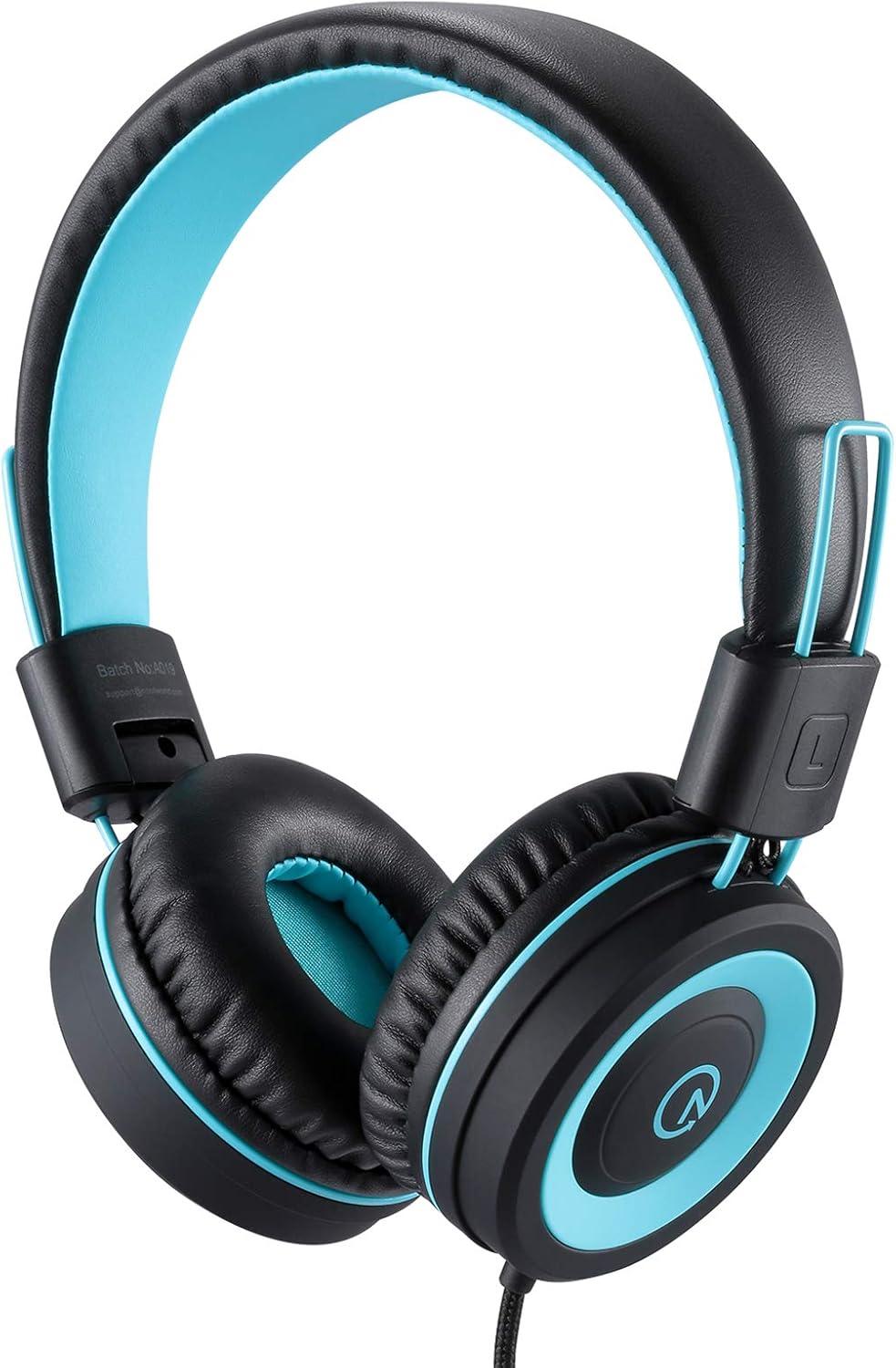
noot products K11 Kids Headphones (Wired) Review
If you’re shopping for kids’ headphones, you’re probably trying to balance a few competing goals: you want something inexpensive (because kids), durable (because kids), comfortable enough for long school or travel sessions, and simple enough that it won’t create tech support headaches at home. The noot products Kids Headphones K11 are built around that exact idea: a wired, on-ear, foldable headset with a 3.5mm plug and a 5-foot “tangle-free” cord.
I’m going to be upfront about what these are—and what they aren’t. The K11 is not a premium, noise-canceling, Bluetooth, app-controlled headphone. It’s a straightforward wired pair that’s meant to be tossed into backpacks, used on tablets/laptops, and replaced without tears if it eventually gets lost. For a lot of families and classrooms, that’s exactly the point.
🛒 Check Current Price on Amazon →
Quick Specs (What You’re Actually Getting)
- Type: Wired on-ear headphones (no Bluetooth)
- Connector: 3.5mm audio plug
- Cable length: 5 ft (marketed as tangle-free)
- Form factor: Foldable for storage/travel
- Controls/Mic: This model is typically headphones-only (no mic/remote)
Compatibility note: Because these are 3.5mm wired headphones, they work best with devices that still have a headphone jack—many tablets, Chromebooks, laptops, older iPads, Nintendo Switch (handheld), airplane seat jacks (with adapter if needed), etc. If your kid uses a newer iPad or phone that’s USB‑C or Lightning-only, you’ll need the appropriate adapter.
Design & Build: Made for Backpacks, Not Display Cases
The K11’s design is intentionally simple: lightweight on-ear cups, a padded headband, and a hinge system that lets the headphones fold inward. That fold is more useful than it sounds—kids tend to shove headphones into bags, desk cubbies, and seat pockets. Foldability reduces the chance of the headband getting torqued in a way that permanently twists the frame.
The plastic build is what you’d expect at this price point: it’s not luxurious, but it’s also not trying to be. The important question is whether it feels like it can survive everyday kid use. In my experience with budget kids’ wired sets, the two most common failure points are:
- Cable strain near the plug (yanking the cord out of a tablet or laptop)
- Headband stress (pulling the cups too far apart or stuffing them into a bag)
The K11’s folding design helps with the headband stress side of things. On the cable side, the “tangle-free” claim is mostly about the cable jacket being less grabby and less prone to tight knots than ultra-thin rubber cords. It still can tangle (anything can), but it’s generally less annoying than the cheapest cords you’ll find in bulk classroom packs.
Real-world durability expectations
Let me set expectations clearly: at this budget level, you should treat any kids’ wired headphones as semi-consumable. If your child is careful, these can last a long time. If your child is the type who walks away from the tablet while still wearing them (the classic “cord yank”), no wired headphone is immune. The K11 is a good candidate for families who want a low-cost, low-stress option that you won’t panic about replacing.
Comfort & Fit: On-Ear Can Be Great… or Annoying
Comfort is where on-ear headphones can be a win or a miss depending on your kid. The K11 sits on the ears rather than around them. That usually means:
- Pros: lighter, less sweaty, easier to hear a parent/teacher when needed
- Cons: can create pressure on the ear cartilage during long sessions
For younger kids, on-ear often works well because their ears are smaller and the cups cover enough area to feel stable. For older kids/teens with larger ears, on-ear designs can start to feel “pinchy,” especially if the clamping force is strong.
The padding here is basic but serviceable. I wouldn’t call it plush, but it’s not bare plastic either. If your use case is short-to-medium sessions—like 20–60 minutes at a time for school apps, a car ride, or a plane movie—comfort is typically fine. If your child is doing multi-hour stretches (long flights, all-day remote school, marathon study sessions), I’d consider stepping up to an over-ear model with bigger cushions.
Adjustability
The headband adjustability is important for getting a good seal (or at least a stable on-ear placement). With kids’ headphones, a limited adjustment range can be a deal breaker. The K11 generally offers enough range for typical elementary school use, and it can work for older kids too, but it’s still a “kids” fit first and foremost.
Sound Quality: Clear Enough for Learning, Fun Enough for Videos
When parents ask me about kids’ headphones sound, I always ask: What’s the content? Audiobooks and learning apps need clarity in voices. YouTube and movies need intelligible dialogue. Music is where weaknesses show up fastest—especially bass distortion and harsh treble.
The K11’s sound signature is what I’d call kid-friendly and practical. You can expect:
- Vocals/dialogue: generally clear, which is the most important part for school
- Bass: present but not deep; don’t expect “thump”
- Treble: can lean a bit bright at higher volumes (common in budget drivers)
For tablets, Chromebooks, and handheld gaming, this is usually perfectly acceptable. If you’re buying these for a child who is very into music and notices sound differences, you may want something a tier up. But for the majority of kids listening to lessons, watching shows, and playing casual games, the K11 gets the job done.
Volume and hearing safety (important)
One thing I want to address clearly: many “kids” headphones advertise volume limiting (often around 85 dB). The K11 listing name you provided doesn’t explicitly state a volume limiter in the title, and different kids models/variants can vary. My advice is simple: don’t assume any headphone is volume-limited unless it clearly states it and you’ve verified it from the manufacturer’s specs.
Regardless of the headphone, you can protect hearing by:
- Enabling volume limits in iPad/Android/Fire tablet settings where available
- Teaching the “60/60” habit (about 60% volume for 60 minutes, then a break)
- Using quieter environments when possible (kids crank volume to overcome noise)
Isolation & Leakage: Not Noise Canceling, Not Silent for Neighbors
Because these are on-ear and not sealed over-ear, you should expect moderate isolation. They reduce some ambient sound, but they won’t block out a noisy classroom or airplane engine the way a tighter over-ear design might. That also means your child may turn the volume up in loud environments.
Sound leakage is also moderate. At reasonable volumes, it’s fine. At high volumes, people nearby may hear it—especially in quiet rooms. If you need something for a library or a shared bedroom, you’ll want to coach your kid to keep volume reasonable.
The Cable: 5 Feet Is the Sweet Spot for School Desks
A 5-foot cable is a practical choice. It’s long enough to reach from a laptop on a desk to a child sitting normally without tugging, but not so long that it becomes a lasso in a rolling chair. If you’ve ever dealt with 10-foot headphone cables in a classroom, you know why this matters.
The “tangle-free” marketing usually means the cable has a flatter or smoother jacket that resists tight knotting. In day-to-day use, it does tend to be less frustrating than ultra-thin cords, but I still recommend teaching kids a basic wrap technique (or using a small Velcro tie) if these live in a backpack.
Wired reliability is underrated
For school and travel, wired headphones still have major advantages:
- No charging (huge for trips and school weeks)
- No pairing issues (especially on shared tablets or school Chromebooks)
- Lower latency for videos and games
If your household is tired of Bluetooth dropouts and “why won’t it connect,” a basic wired set like the K11 can feel like a relief.
Microphone & Controls: The Big Limitation for Remote Learning
Here’s a key point that can make or break your purchase: the K11 model described is a headphones-only wired set (no boom mic, and typically no in-line mic/remote). That’s totally fine for:
- Watching videos
- Listening to audiobooks
- Offline learning apps
- Nintendo Switch / handheld gaming audio
But it’s not ideal for:
- Zoom/Meet classes where the child needs to speak clearly
- Online tutoring sessions
- Voice chat in games (depending on device support)
If your child needs to talk, you’ll either need a separate mic (like a USB mic for a computer) or a different headset that includes a microphone. This is one of the most common “oops” moments I see with parents buying school headphones—so double-check your needs before clicking buy.
View on Amazon (Latest Price & Reviews) →
Device Compatibility: What Works (and What Needs an Adapter)
The K11 uses a standard 3.5mm headphone plug. That’s perfect for a huge number of kid-centric devices, but the market has shifted—some tablets and most modern phones have removed the headphone jack.
Typically works great with:
- Many Chromebooks used in schools (often still include 3.5mm)
- Many Windows laptops and some Macs (older models)
- Amazon Fire tablets (many models include a headphone jack)
- Nintendo Switch (3.5mm on the console)
- Airplane entertainment systems (sometimes requires a dual-prong adapter)
May require an adapter:
- Newer iPads without a headphone jack (USB‑C to 3.5mm)
- Most modern Android phones (USB‑C to 3.5mm)
- iPhones without a headphone jack (Lightning to 3.5mm)
If you’re buying these specifically for an iPad, check whether your iPad model has a headphone jack. If it doesn’t, factor the adapter cost into your value calculation.
Travel Use: Planes, Cars, and Waiting Rooms
This is one of the K11’s strongest use cases. For travel, I like wired kids headphones because they’re predictable. No battery anxiety. No pairing. No “it connected to Dad’s phone again.” You plug in and go.
The foldable design helps them fit into a small pouch or backpack pocket. The on-ear design is also less bulky than big over-ears, which matters when you’re packing for multiple kids.
On planes, the main downside is isolation. If your child is sensitive to engine noise, they may turn up volume to compensate. In that case, I’d consider over-ear passive isolation or kid-friendly ANC (active noise canceling) if your budget allows. But for typical family travel where the goal is simply “keep them entertained,” the K11 does fine.
School Use: Classroom, Library, Computer Lab
For classroom use, the K11 hits a lot of the right notes:
- Simple wired connection for Chromebooks and shared devices
- Reasonable cable length for desks
- Foldable for storage in backpacks
- On-ear awareness (kids can still hear a teacher calling them)
The biggest question for school is whether a mic is required. Many schools now expect a headset with a microphone for testing, language apps, or remote learning days. If your school specifically says “headset with mic,” don’t try to force a headphones-only model to fit that requirement.
Pros and Cons (Honest Take)
Pros
- Wired reliability: no charging, no pairing, low latency
- Foldable design: easier to store and less likely to get bent in a bag
- Good for school basics: clear enough for speech, videos, and learning apps
- Practical 5 ft cable: desk-friendly length
- Value-focused: typically priced in the “buy without stress” category
Cons
- On-ear comfort limits: can get uncomfortable for long sessions for some kids
- Not ideal for loud environments: limited isolation can lead to higher volume
- Mic/controls often missing: not a great fit for Zoom classes or voice chat
- Adapter may be required: for newer iPads/phones without a headphone jack
- Budget build: durable enough for the price, but not “indestructible”
Who These Headphones Are Best For
I recommend the noot products K11 if you need:
- A simple wired headphone for a kid who uses a tablet or Chromebook
- A travel headphone you can toss in a bag without worrying too much
- A backup pair for grandparents’ house, the car, or a spare school kit
- A budget-friendly option where “good enough” is exactly the goal
I’d skip the K11 and buy a different model if:
- Your child needs a microphone for school or calls
- You want strong noise isolation for planes or noisy buses
- Your child is sensitive to on-ear pressure and needs over-ear cushions
- You’re committed to wireless convenience (and can manage charging/pairing)
Buying Advice: How to Choose the Right Kids Headphones
If you’re on the fence, here’s how I suggest making the decision quickly.
1) Check the device ports first
Look at the actual device your child will use most. If it has a 3.5mm jack, you’re good. If it’s USB‑C only or Lightning only, decide whether you’re comfortable managing adapters (and the reality that adapters get lost).
2) Decide if a mic is required
This is the most important functional question. For pure listening, the K11 is fine. For speaking in class calls, you’ll want a headset with a mic.
3) Match the headphone style to session length
- Short sessions: on-ear is usually fine and less bulky
- Long sessions: over-ear tends to be more comfortable
4) Think about the environment
In a quiet house, these work well. In a noisy plane cabin, you may want something that isolates better to avoid the “turn it up” problem.
Value Assessment: Is the noot K11 a Good Deal?
Value is where the K11 tends to shine. You’re paying for simplicity and practicality more than premium audio. If you’ve ever bought a more expensive pair only to have it lost at school, stepped on, or “mysteriously” left on the bus, you understand why a solid budget option is sometimes the smartest move.
In my opinion, the K11 makes the most sense when you treat it as:
- A primary school headphone for listening-focused tasks, or
- A secondary/travel headphone even if your child has a nicer pair at home
If you need a mic, heavy isolation, or premium comfort, you’ll spend more—and it may be worth it. But if your goal is dependable wired listening at a reasonable price, the K11 is a sensible buy.
My Bottom Line
If you need a wired, foldable, kid-friendly headphone that’s easy to use with tablets and laptops, the noot products K11 is a practical, budget-smart pick. It’s not trying to be fancy, and that’s honestly its biggest advantage: fewer features means fewer things to break, charge, pair, or troubleshoot.
Just make sure you’re buying it for the right reasons. If your child needs to talk in online classes, choose a headset with a mic. If you need serious noise blocking for travel, consider an over-ear alternative. But for everyday listening—school apps, videos, and travel entertainment—the K11 delivers solid value for the money.