ORICO Travel Power Strip Review: Worth It in 2026?
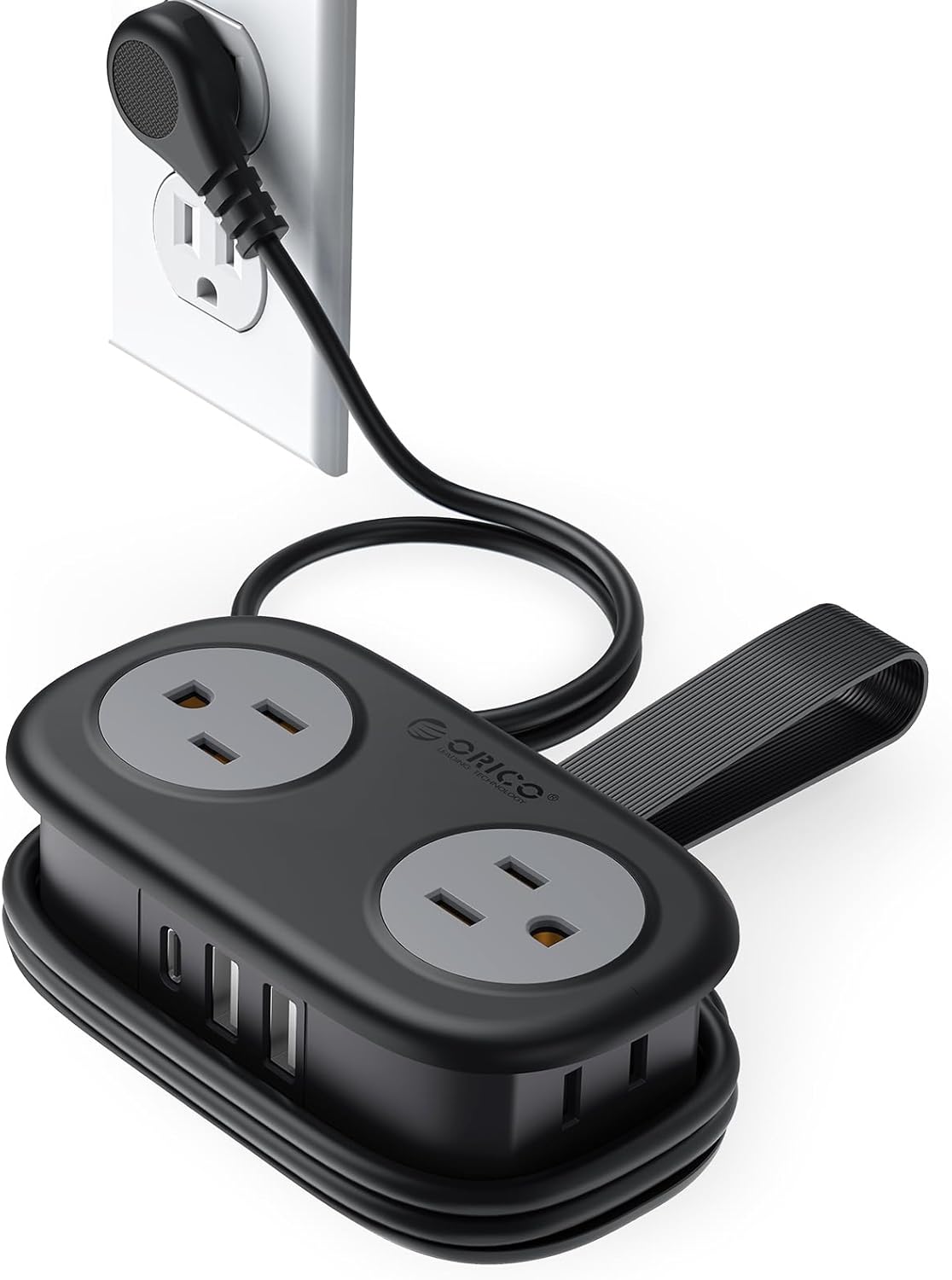
ORICO AP3 Travel Power Strip: what it is (and why it exists)
If you’ve ever checked into a hotel room and found exactly one usable outlet—often hidden behind a nightstand—you already understand the appeal of a travel power strip. The ORICO Travel Power Strip (AP3) is built for that exact scenario: it’s a compact, travel-oriented strip with 4 AC outlets plus 3 USB charging ports (including 1 USB-C) and a short 4-foot wrapped extension cord designed to pack neatly.
In plain English: this is meant to let you charge your phone, watch, earbuds, and laptop brick at the same time without playing outlet Tetris—or unplugging the lamp just to charge your battery pack.
It’s also marketed as cruise approved, which is a big deal because many cruise lines ban power strips that include surge protection. That “cruise approved” label doesn’t automatically guarantee acceptance on every ship, but it does tell you ORICO is aiming at the non-surge, travel-safe category that cruise policies typically allow.
🛒 Check Current Price on Amazon →
Key specs and layout (what you’re actually getting)
The ORICO AP3’s headline feature set is straightforward:
- 4 AC outlets for standard plugs (think laptop chargers, camera chargers, hair tools that don’t exceed the strip’s rating, etc.)
- 3 USB ports total: 2× USB-A and 1× USB-C for charging phones, tablets, earbuds, power banks, and travel accessories
- 4-foot short extension cord with a wrapped/managed design for packing
- Compact travel footprint meant to sit on a desk or nightstand without taking over the entire surface
What matters more than the bullet list is how it’s arranged. Travel power strips live or die by outlet spacing and cord usability. Four outlets is only “four outlets” if you can actually plug four things in at once—especially when two of those things are chunky laptop bricks.
In real use, the ORICO’s compact approach is a double-edged sword: it packs easily, but compact strips can become crowded fast when you mix large wall-warts with standard plugs. If most of your charging is USB-based (phone, watch, earbuds, battery pack), the AC crowding becomes less of a problem because you’ll only need one or two AC outlets for larger chargers.
Real-world performance: AC power delivery and reliability
For travel strips like this, I care about two things: stability (no intermittent connection, no wobbly plug fit) and heat management (it shouldn’t get alarmingly warm during normal charging loads).
In typical hotel use—one laptop charger plus a couple of USB devices—the ORICO AP3 is the kind of product you plug in and forget. That’s the best compliment I can give a power accessory: it doesn’t create drama. If you’re using it for common travel electronics (laptop, phone, tablet, camera batteries), it’s doing the job it was designed to do.
Important reality check: a compact travel strip is not the same as a heavy-duty home surge strip. You should treat it like a charging hub and outlet expander, not a “run everything in the room” power station. If you’re thinking about running high-draw devices (space heaters, hot plates, big hair dryers, etc.), that’s where travelers get into trouble—both from a safety standpoint and from hotel/cruise policy issues.
USB charging: convenient, but manage expectations
The ORICO AP3 includes USB-A ports plus a USB-C port, and that’s exactly what most travelers want in 2026: fewer separate wall chargers to pack, fewer outlets consumed, and a single place to drop your devices at night.
That said, it’s important to understand what “USB-C included” does and doesn’t mean. Many travelers assume USB-C automatically equals fast charging like a modern phone charger or a laptop USB-C PD brick. In reality, some travel power strips provide USB-C for convenience but not full USB-C Power Delivery (PD). If your goal is to fast-charge a modern phone at top speed or power a USB-C laptop, you’ll want to verify the strip’s USB-C output specs before you rely on it as your only charger.
How I recommend using the USB ports on a product like this:
- Best use: overnight charging of phones, earbuds, watches, and power banks
- Good use: topping up a tablet or handheld gaming device
- Not ideal: expecting it to replace a dedicated high-watt USB-C PD laptop charger
If you’re the kind of traveler who brings a MacBook/USB-C ultrabook and wants one charger to rule them all, you may still pack your dedicated USB-C PD charger and use the ORICO’s AC outlets for that—while the USB ports handle everything else.
Cord length and “wrapped short extension cord”: why it matters
The 4-foot cord is a smart middle ground for travel. Shorter than a home strip (so it’s easier to pack), but long enough to solve the classic hotel problem where the only outlet is behind furniture or too far from the nightstand.
The “wrapped” concept is also more important than it sounds. A loose cord in a suitcase turns into a knot, and a knot turns into frustration when you’re tired and trying to set up your devices at 11:30 PM. A travel strip that manages its own cable is one of those small quality-of-life upgrades you appreciate every single trip.
Where a 4-foot cord can still fall short: older hotels with awkward outlet placement across the room, or rooms where the desk outlet is occupied by a lamp with a short cord that can’t be moved. In those edge cases, you’d want a longer extension—though longer cords also add bulk and can be more annoying to pack.
Hotel usability: the nightstand test
Here’s the scenario I judge every travel power strip by: you arrive, you’ve got a phone and earbuds nearly dead, and you want everything charging within arm’s reach of the bed. The ORICO AP3 is designed for exactly this, and it generally succeeds because:
- Multiple outlets mean you can run a laptop charger and still have room for other gear.
- USB ports reduce the number of bulky adapters you need to pack.
- Compact body sits neatly on a nightstand or desk.
The main limitation is outlet spacing if you’re using multiple large “brick” chargers. If your kit includes two big laptop adapters (yours + a partner’s), plus a camera charger with a thick plug, you may find yourself rotating plugs and choosing which ones go where. That’s not unique to ORICO—it’s the tradeoff of compact travel strips in general.
Cruise “approved” considerations (read this before you sail)
If you’re buying this specifically for cruising, you’re probably doing so because cruise lines often prohibit surge protectors. Most cruise policies allow non-surge outlet expanders and strips (policies vary by line and can change), and the ORICO AP3 is positioned for that category.
My practical advice:
- Check your cruise line’s current policy (don’t rely on a product listing alone).
- Avoid anything labeled “surge protector” if the line bans them.
- Pack it accessibly in case security wants to inspect it.
Even if it’s technically compliant, enforcement can vary ship-to-ship. But choosing a travel strip that’s explicitly marketed as cruise-friendly is the right starting point.
Build quality and safety: what I look for in travel power gear
With anything that plugs into the wall, I’m picky. A travel strip gets tossed in bags, pulled out by the cord, jammed behind desks, and generally treated worse than a home strip. So I look for:
- A solid housing that doesn’t creak or flex excessively
- Firm outlet tension so plugs don’t fall out easily
- Reasonable heat behavior under normal charging loads
- Practical cord strain relief where the cable meets the body
The ORICO AP3 is designed as a compact travel unit, and it feels like it belongs in that category rather than the bargain-bin “disposable” strips. That said, it’s still a small travel strip—so I recommend treating it as a charging and light-duty power accessory, not a workshop tool.
One more safety note that’s worth stating plainly: if you’re traveling internationally, this model is for US-style outlets. It’s not a voltage converter, and it’s not a plug adapter. If you need international compatibility, you want a travel adapter/converter solution (or a separate adapter paired with a dual-voltage charger).
What I like most (the real pros)
- Excellent travel-friendly concept: 4 AC outlets plus USB-A and USB-C covers most modern travel kits.
- Reduces charger clutter: You can leave a couple of wall bricks at home and rely on the built-in USB for smaller devices.
- 4-foot cord is the sweet spot: Long enough for awkward hotel outlet placement without being a packing nightmare.
- Great for bedside charging: One hub for everything—phone, earbuds, watch, battery bank.
- Cruise-focused positioning: If you’re shopping specifically for cruise compliance, this is the right style of product to consider.
What could be better (the honest cons)
- USB-C may not replace a dedicated fast charger: If you expect high-watt USB-C PD for laptops or peak phone fast-charging, you may still need your own PD brick.
- Outlet crowding is possible: Compact strips can struggle with multiple oversized power adapters at once.
- Not a surge protector (by design): That’s good for many cruises, but if you want surge protection for sensitive gear in hotels, you’ll need a different solution.
Who this is best for (and who should skip it)
This is a great buy if you:
- Travel with multiple small USB devices (phone, earbuds, watch, power bank) and one or two AC chargers (laptop/camera).
- Stay in hotels, Airbnbs, or conference venues where outlets are scarce or inconveniently placed.
- Want a single bedside charging station rather than a mess of separate chargers.
- Are preparing for a cruise and want a travel strip style that’s typically permitted (always check your line’s rules).
You should consider alternatives if you:
- Need high-watt USB-C PD specifically to power/charge a USB-C laptop from the USB-C port.
- Regularly plug in multiple bulky AC adapters at once and hate outlet juggling.
- Want surge protection as a priority for expensive electronics (and you’re not constrained by cruise rules).
Value assessment: is it worth the money?
Travel power strips range from ultra-cheap no-name options to premium travel hubs. The ORICO AP3 sits in the “practical, brand-name travel accessory” lane: you’re paying for a more thought-out design (USB mix, compact body, manageable cord) rather than just “more outlets.”
I tend to think products like this are worth it if they prevent even one travel annoyance per trip—like hunting for outlets, unplugging lamps, or rotating chargers all night. If you travel more than once or twice a year, the convenience payoff is real.
Where the value can drop is if you buy it expecting it to replace a full-featured fast charger. If you already own a great USB-C PD wall charger, the ORICO becomes a perfect companion (AC for your PD charger + USB ports for everything else). If you don’t own one and you want top-speed charging, you may want to budget for a dedicated PD charger too.
Buying advice: how to choose the right travel power strip
If you’re comparing the ORICO AP3 to other travel strips, here’s the checklist I recommend using:
- Outlet count vs. outlet spacing: Four outlets is great, but spacing determines whether you can use all four.
- USB mix: Having USB-C is a big plus. Just confirm whether you need PD fast charging or basic charging is fine.
- Cord length: 4 feet is generally ideal for hotels. Shorter can be limiting; much longer can be bulky.
- Cruise rules: If cruising, prioritize non-surge designs and check policies.
- Your real device list: Write down what you charge nightly. If it’s mostly USB devices, this ORICO layout makes a lot of sense.
🛒 See Latest Reviews on Amazon →
My verdict
If you need a compact, travel-first power strip that can turn one inconvenient outlet into a functional charging station, the ORICO AP3 is a strong pick. The combination of 4 AC outlets and USB-A + USB-C is exactly what most travelers carry today, and the 4-foot cord is long enough to solve the common hotel layout problem without becoming a packing hassle.
Just go in with the right expectations: the USB-C port is a convenience win, but it may not replace a dedicated high-watt USB-C PD charger for laptops or maximum fast charging. Used as a travel hub—AC for your bigger chargers, USB for your smaller devices—it’s genuinely useful, and it’s the kind of accessory you’ll end up packing for every trip once you’ve used it a couple of times.
If that’s the travel problem you’re trying to solve, I’d feel good recommending the ORICO AP3 as a practical, space-saving upgrade for hotel stays and cruise travel alike.